October 14 2023
Dear All,
When I saw the words ‘Kfar Aza’ in a horrific headline this week, I was carried back to 1961, when I and my friend Helen from Girton College, Cambridge, spent part of our long summer vacation in a very small, new outpost in southern Israel, half an hour’s walk from where the Egyptian border was at that time. We were 19 years old and had come by Turkish boat to Israel from Marseille. Kfar Aza, a new kibbutz, was started by people of our own age who had recently come from North Africa. We helped them to build and paint new huts and houses and worked in the grapefruit fields. We sometimes walked down to chat with the two bored United Nations men – young Scandinavians – who were guarding the border, at the edge of no Man’s Land. We flirted and sang and danced in the evenings. It seemed like an innocent time. Our friends at Kfar Aza would now have been grandparents or great-grandparents, if they stayed on. There were still only 750 people living there – until this week.
It matters to me to mourn that place and its murdered inhabitants today, as you mourn a place where you were young, and got your hands in the earth, where you were all idealistic and energetic together - because idealism was possible, as it can only be when you do not see the whole picture. And that mourning means that now, in 2023, I have also to mourn the people we were not told about, the Palestinians. Because of Kfar Aza, I must also mourn the bombed refugee camps in Gaza and the ongoing destruction of Gaza city.

To re-iterate what I wrote last week in a Substack post last week: do please read “Tracing Homelands”, an excellent, thoughtful, timely memoir by Linda Dittmar of growing up in Israel and later, discovering its hidden history. It’s published this week by Olive Branch Press – whose name, today, means everything.
We must not get stuck on an ‘eye for an eye’ – the rhetoric of revenge - in 2023. We must not allow ourselves to become ‘eyeless in Gaza.’ Surely we have to do everything we can to demand that the killing must stop.
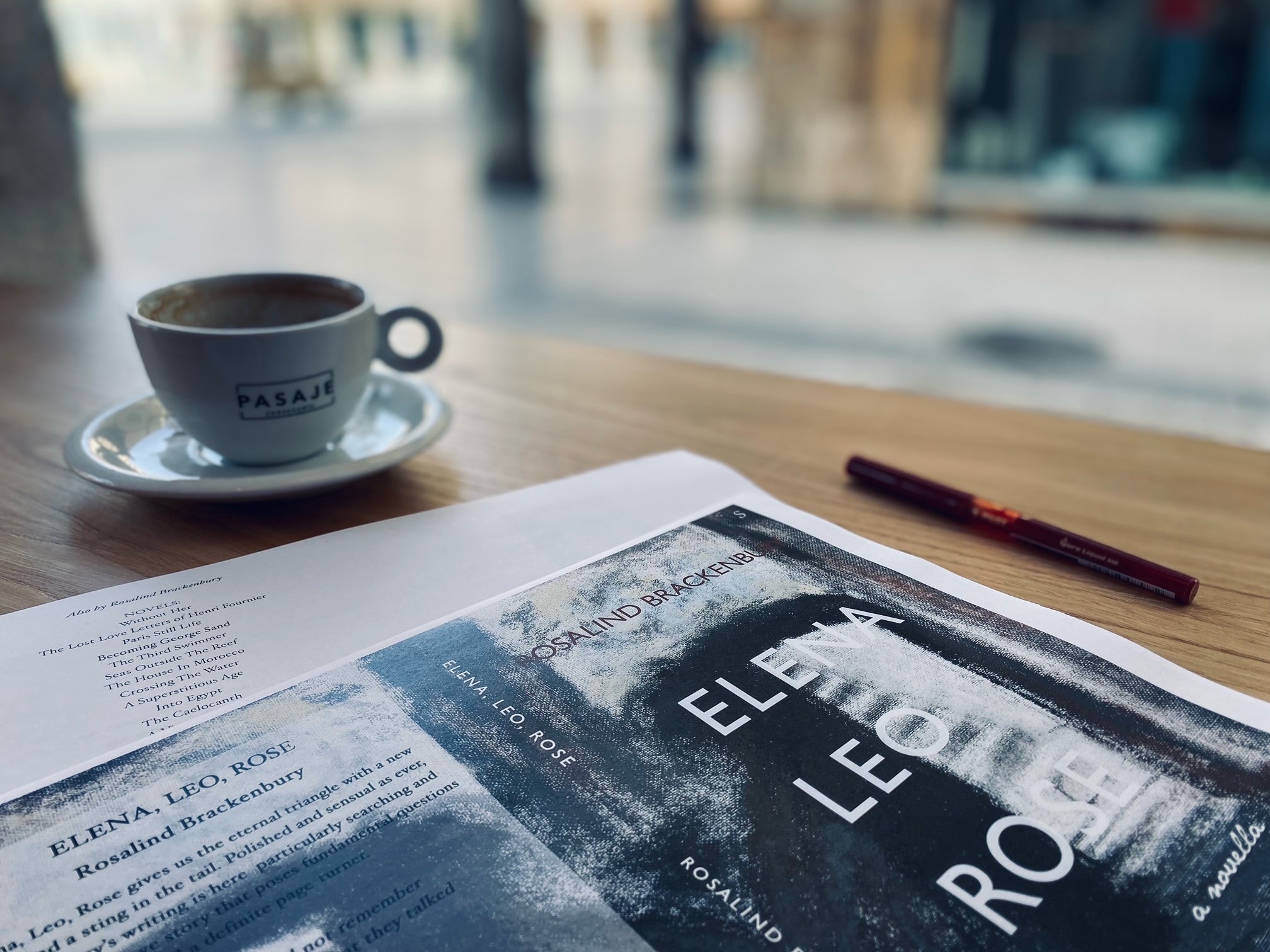
Meanwhile, back in Key West, where I live: I have two books about to appear from Open Boat Publications this fall, one a reprint of my 1990’s Key West novel of love, death and illegal immigration, “Seas Outside The Reef” and the other a collection of short stories set in Key West, over the last 30 years, “Light Over Islands.” Both have beautiful covers made from paintings by Susan Sugar, designed by Kim Narenkivicius.
Both books will be available for pre-order soon and I am planning a launch party in Key West in mid- November, and I’ll hope to see some of you there! My new novel, “Bone Whispers” will be out in February from Epicenter Press.
Go well, be safe – affectionately, Ros