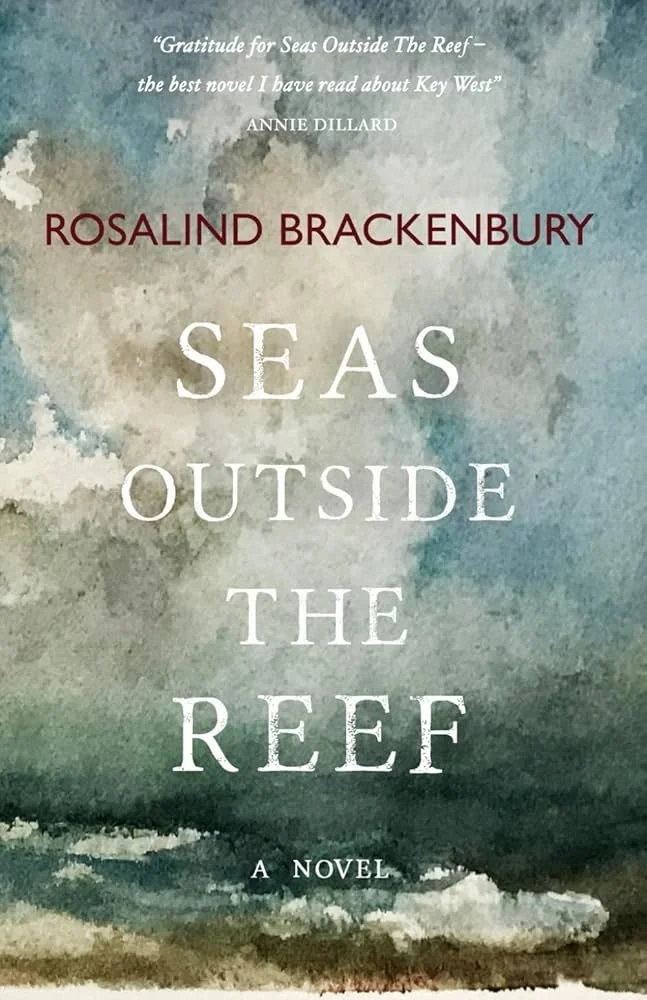
An Introduction to 2nd edition
I first heard about Key West from a French sailor in Essaouira, Morocco, who had been a diver with Mel Fisher, in his search for the treasure from the wrecked ship Atocha. “You will like it. It’s very cosmopolitan and there is no car traffic.”
When I first came to the island in 1992, I had no idea that I would marry and spend the next 30 years here. Life moves in strange patterns. I wrote this novel when I was new to Key West and it was a different place from the one I live in now, in 2023. There were oyster shells on the parking lot at the Bight, people lived cheaply, it was the post-hippie era and rents were still low. I rented an apartment on White Street, a few houses away from the ramshackle house in which Elizabeth Bishop had once lived. These decades later, I’m still here, living just around the block.
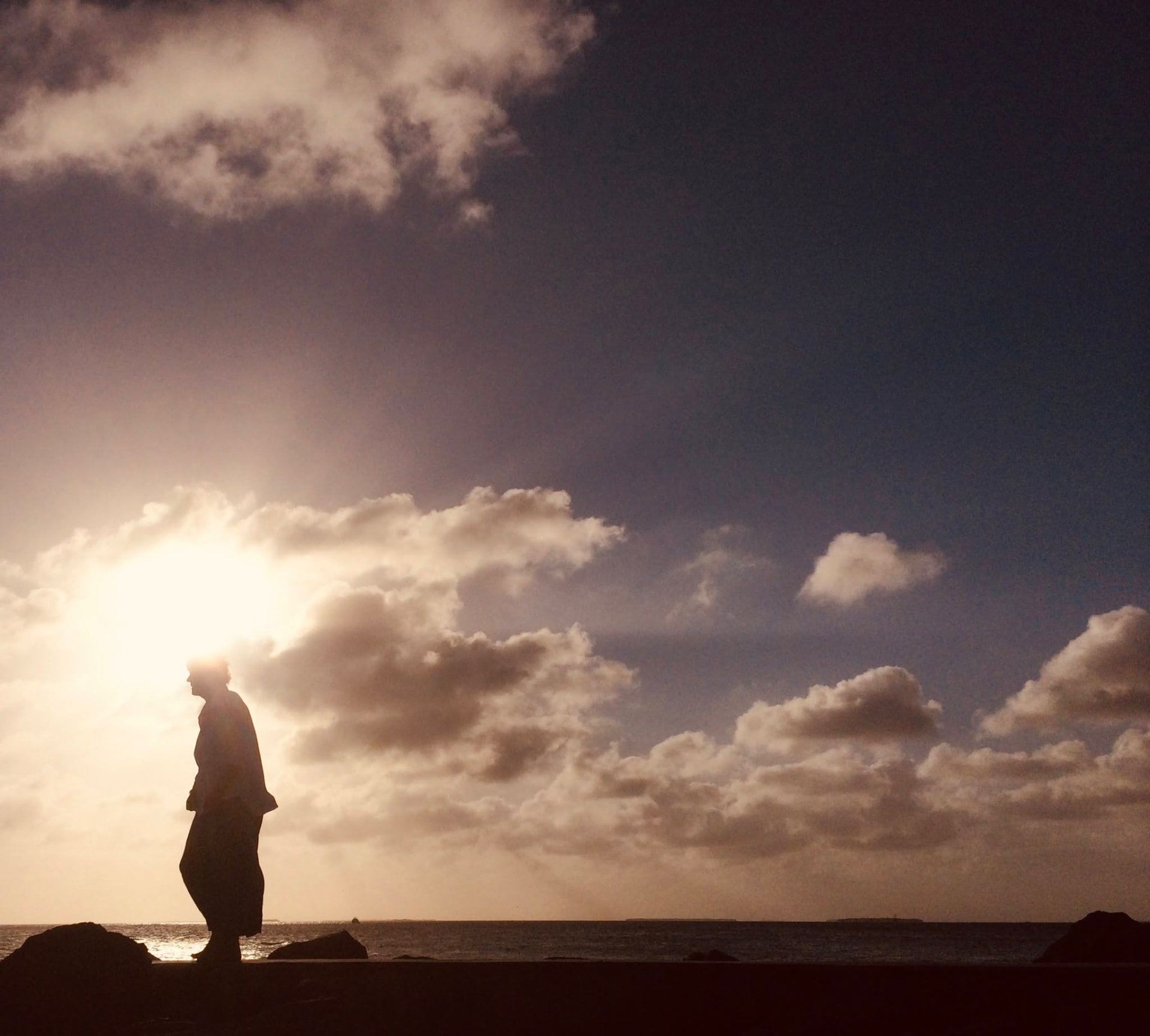
I watched the schooners go out at sunset and decided I would learn to sail and get a job on one. My new husband was working out at sea, and I hung out with his friends on Caroline Street, eating our dinner on the sidewalk or going down to picnic where the boats were moored at the Bight. The ocean was clear and there were few tourists. Summers were quiet, apart from hurricanes. But even then, there were those who had been here for decades, who told me how different the island used to be– and I realized that it is a place in evolution, ever-changing, going through massive alterations while keeping its same small geographical place on the map.
When I first went to Cuba, it was 1994. People were hungry, as the Russians had only recently pulled out, taking their sugar, rum and tobacco deals with them. I had no idea that we were not supposed to go there from here, and hopped on a boat with five others and parcels of food and medicine from all over the US, to land in Varadero. That is another story in itself. But the connection between the two islands – ours, and that of the neighbor we were not allowed to talk to – fascinated me. Cubans were landing almost daily on our shores here, seeking asylum as they still are today. The story of my novel evolved from the image of our schooners going out to sea, and the tattered Cuban boats coming in, across the straits of Florida – a graveyard, a place of beauty, a threatened, vulnerable meeting place of people, tides and sudden winds.
The Key West described in this novel is no more, and the ecological balance of this small island today is seriously at risk. Giant cruise ships dock here in spite of our protests, and discharge thousands of people. Dozens of flights a day come in from all over the US and their noise drowns our talk, fractures our peace of mind. Mass tourism threatens to overwhelm us. And yet others still come here and fall in love with it all, and find what they were looking for, or simply relish the search.
Bob Dylan sang recently: ‘Key West is the place to be/if you’re looking for immortality.’ I’m not sure about that – but he got it, the je-ne-sais-quoi, that elusive essence of a place that makes people travel to it, hoping for something they have not yet found, seeking escape from what they already know. Like many places that draw people to them, there is the myth and there is the reality. Those of us who live here exist somewhere in between.
Like Essaouira in Morocco, on the old trade route up from central Africa, it is a place of connection – the flow of people passing through, of goods, of ideas, of all human commerce. You feel life move through it, and you never quite know what will happen here next.
Rosalind BrackenburyKey WestNovember 2023
Part one · 1
LIGHTS dropped their reflections into the Miami River, plumbing its darkness. Streetlights, office building lights, the lights of passing boats. Close to here, the river opened out into the ocean, as it always had, always would, no matter what was built up around it. Here, sitting low and close to the water, you could watch the river traffic, ignore the skyscrapers and streets that ran through the air propped on huge stilts, turn your back on the vacant lots under the highway where wire kept vagrants out and the beams of police cars’ lights searched the corners. Here, you could behave as if the whole city had not been built, or thought of. Old Florida, wooden houses, palm trees, lay underneath the modern city, a layer in its archaeology. You could sit and watch it, its slow-moving tropical self devoid of air-conditioners and speeding cars, innocent of towering bank buildings and sealed offices. Boats, fishermen, people ignoring the whine and whir of the city above them. Cats, waiting for scraps. An old house under the bridge, hibiscus budding in its abandoned yard, its tile roof slipping sideways, jungle and wire, a fence that gave way to let someone slip behind it. Tugs on the river. A bridge opening, raising its arms to let a tall ship through. And the boats that went out backwards, downstream, because the river was narrow, with no way to turn.
Emilia sat in the restaurant that had once been an old fish house, and though she was listening to her brother, her eyes were on the river and its traffic. Boats being loaded with mattresses and old bicycles to go to Haiti. St. Innocent, Man O’War, Miss Yelena. Old fishing boats turned into cargo boats, moored down there beyond the bridge that opened. Men of that dense blackness of Haiti, as if there were too much heat there to be reflected. Men with skins you could warm yourself at. But she was drifting, unable to concentrate, playing with her wine.
Pedro said, “It’ll probably be about two weeks. If the weather holds, and we don’t get any storms. There’ll be a boat going out to meet them. Have you fixed somewhere to stay?”
“Yes. I booked a hotel. I might as well get a vacation out of this.”
“You sound as if you don’t want to see him.”
“Well, I don’t know. How can I know? It’s been so long, it’s impossible to imagine. It’s like going to meet a ghost.”
“It may seem more real when he arrives. I hope so. Anyway, you will have done what you had to do.”
“What I had to do. Yes.”
“Shall we order?”
“I’m having the yellowtail. Oh, and ceviche to start.”
The young waitress took their order. “My name is Maria,” she said. Where was she from? Nicaragua, Colombia, Brazil? Maybe even Cuba.
Emilia said, “Isn’t it strange, how down here you can see what Miami was. A trading post, a fishing village. A collection of shacks around the mouth of a river. While Havana was a city, for centuries. Don’t you think it strange, that they all come here?”
Pedro said, “It’s what people want.”
“It’s what they’re told they want.”
“It’s often better than what they have.”
“It’s illusion,” she said. “Glittering illusion. A bauble, to draw children from all over the world.”
“Easy to say, when you live here.”
“To be American, in this century. Everyone’s supposed to want to be American. To deal in toys and illusion, like a magician.”
The dim lights swung above the Haitian boats, their paintwork, the stacks of bicycles tied down with rope. White plastic chairs, suitcases, lamps, bedsteads: the debris of this city which somewhere else, people would want. The world swung this way and that by wanting, by the imperiousness of desire for what it did not have.
“Emmy, cara.”
“What?”
“Don’t worry about it. It’s gonna go fine.”
“I’m not worried. But it brings up stuff for me, you must see that. Old feelings, uncertainties.”
“It’ll be just for the formality. Then you will be free.”
“How do you know? I was made free, perhaps I’ll be made unfree again. Anything can happen, when you start digging up the past.”
“It’s paperwork,” he said, “bureaucracy. It’s just to have everything in place. It can’t be done without you.”
“I know that. It’s okay.”
“Then you’ll just come right back, no problem, and go on the way you were before.”
He leaned across the small table towards her, a bite of white fish spiked on a fork close to his mouth. He popped in the mouthful, washed it down with wine. The wine in the bottle was yellowish in the streetlights, the lights from under the highway. They were sitting in a restaurant where no restaurant should be, but people are sitting by rivers, in working ports, to eat their dinner these days; it’s chic, it’s for tourists, it makes a change. He was young, that’s why it seemed so simple. To go to meet a man you used to be married to, whom you have not seen for fourteen years. He couldn’t see any complication. It was for the paperwork. For the authorities. A marriage in name only, to be abandoned at once. A fiction, a story become a lie.
She lit a cigarette and watched his dark thin face, the way he chewed, the way he was impatient with her, wanted objections out of the way.
“You’re not eating that?”
“Not hungry anymore.”
His fork reached across, stabbed up her fish. Her little brother, still taking food from her plate.
“It’s important that you’re doing this. It makes things so much easier.”
“Yeah, I know. Same old story, she’ll do it for the family, for the clan, for history. At least nobody’s telling me this time I’m doing it for the revolution. You’ll call me? Here’s the hotel number. I’ll be in most evenings, late.”
“Most evenings?”
“You don’t expect me to sit in a hotel room all night just doing nothing? I’m going to have a vacation, I told you.”
“Just so long as we can reach you.”
“We?”
“Okay, I.”
“Look at the river,” she said. “Look at that man down there tying up his boat, putting it to bed for the night. See the cat on the dock? Look how she’s yawning, she’s just been fed.”
“Yeah? What about it?”
“That’s what men do on small boats all over the world. See him tying the knot? Slow and careful. Doesn’t know we’re watching him. Probably thinks only God sees him, or the cat. You know, we could be anywhere, anywhere in the world, so why are we here? What are we here for, chiquito?”
“Wow, you’re in a mood tonight. We’re here because, sister, this is where it’s at. This is where we live, and nobody bugs us, nobody gets in our face. You can just arrive here and be invisible, and that’s worth a lot.”
She said, “Invisible? We’re invisible like that fisherman down there is invisible. Somebody’s watching us, but we’re not aware of it, we don’t know who it is. God, or a cat, or a whole bunch of people we can’t see, because they’re on the other side of some one-way glass, and our little lives, our little movements back and forth interest them just about as much as ants’ do, but they still have to step on ants.”
“Are you scared?”
“Of course. But not of what you think.”
“What then?”
“Oh, women’s fears, little brother, ones you wouldn’t understand now you’re such a big man, such an American. Don’t worry. I’m going to do it and I’m going to do it well.”
It was easy enough when you had your own business, to say you’d be away for a couple of weeks, taking a vacation. Jeanne and Dolores would manage it all. In summer, anyway, business was quieter; fewer tourists came and some of the regulars were on vacation up north. You could fly down the Florida Keys in a rental car or a small plane, you could transport yourself back in time and space, be in a known place where nobody knew you, because the person you had been there was gone for good.
She bought a plane ticket in the end, opted for the thirty-five minute hop that was half like a bus ride, half like a fairground treat. Flying low over water like milky jade with the summer thunderstorms creeping around its edge, the glimmer of sheet lightning all around the sky, clouds like castles. The little plane, casting its shadow upon water. The earth tipped sideways as you skimmed above it in a little cylinder like a cigar holder, staring down. The water deepening in color as you came closer. Blue, purple, emerald, pale jade. Water color more brilliant as the sky grew darker, drew curtains that closed you in. The small patches of sudden blue, where a cloud broke open. The channels in the ocean, deep emerald, an unbelievable green, to show where the arteries were, the passageways of the marine world. Sandbars, pale as cream; shallows, brown and red, streaked with weed. Land that might be cloud shadow. Cloud shadow that might be land, islands, banks coming up out of the water, earth coming up through the ocean crackling and alive, to be submerged again by the next tide. Down there was all shifting shallow land, water, one thing endlessly becoming another, no edges, nothing fixed or defined. Maps of those places had to be drawn and redrawn, as the mangroves crept out into the water, their messenger fingers going out to put down roots. Land created and recreated itself. There were no boundaries, no fixed landmarks, only the roads in the ocean, the emerald depths, that showed from up here clear as veins, but down there had to be navigated with stealth and care.
She leaned, cheek to the glass, ignoring the stewardess’ offer of peanuts. Drawn to the slanting earth, the rounded ocean, the curve of the horizon clear as a breast, the glitter of sun suddenly making water solid pewter, a dash of rain spattering the plane wing, cloud swimming up fast as fog. The island chain stretched below her, and there at its end, like a lizard with its blunt muzzle pointing outwards, Key West. The plane bucked and shook and began a sudden descent. It swung out wide over the ocean, came in again. Immediately below, houses in rows, boats moored in rows, boats like dots out upon the ocean. The wrinkled skin of water. The edge of land, a beach like a frill. The bonfires of royal poincianas blazing up at her, the summer giants. God, what memories were here. And here she was, catapulted down into them one more time, August 1994: a bump and shudder upon blacktop, the plane’s wings shaking, and ten other people, legs and heads bent in the cramped space, going out before her into the heat of day, like so many unfolded flies. She saw palm trees, the line of ocean, chartreuse stirred with milk. The warmth touched you like a damp cloth as soon as you moved, as there was no air conditioning in the little airport and the doors hung open. A pink cab waited across the road, with a young man yawning and stretching his arms beside it. And still the lightning flickered on, off, like a bad electrical connection, and the storm might pass them over this time, let them go.
The cab driver motioned her to get in beside him, as the back seat was full of stuff, so she sat and talked, not answering his questions. Yes, a vacation. The Pier House. Yes, she knew Key West, had been here before. She stared out. There were tourists in the streets, even though it was summer. They wore white socks and sneakers and sun hats and took pictures of trees. The trees themselves were as vast as she remembered, banyan and mango, women’s tongue, jacaranda, and the flower of summer, the hot red canopies of royal poinciana. They drove through Old Town, and everything looked painted and bright, compared to the stained worn wood of her memory. It hadn’t looked like this. Key West had not been pretty. There hadn’t been paint, or glass for windows, or expensive imported shrubs, or swimming pools. According to the signs planted outside, most of the houses now seemed to be for sale.
The Pier House, her destination, had not been built; she was shocked to see its size and bulk, how all the old waterfront was now a cliff of hotels, with private beaches, parking lots. Yet still in the streets there was the lazy dusty summer look, because you couldn’t air-condition streets or control who came down them. There were shaggy guys with bottles in brown bags collecting on the small beach down the street from the hotel. A man stretched out either asleep or dead, right on the sidewalk. A dog ran out, accosted another, smaller dog, and began fucking her right in the parking lot.
The cab driver grinned at her. “Welcome to Key West.”
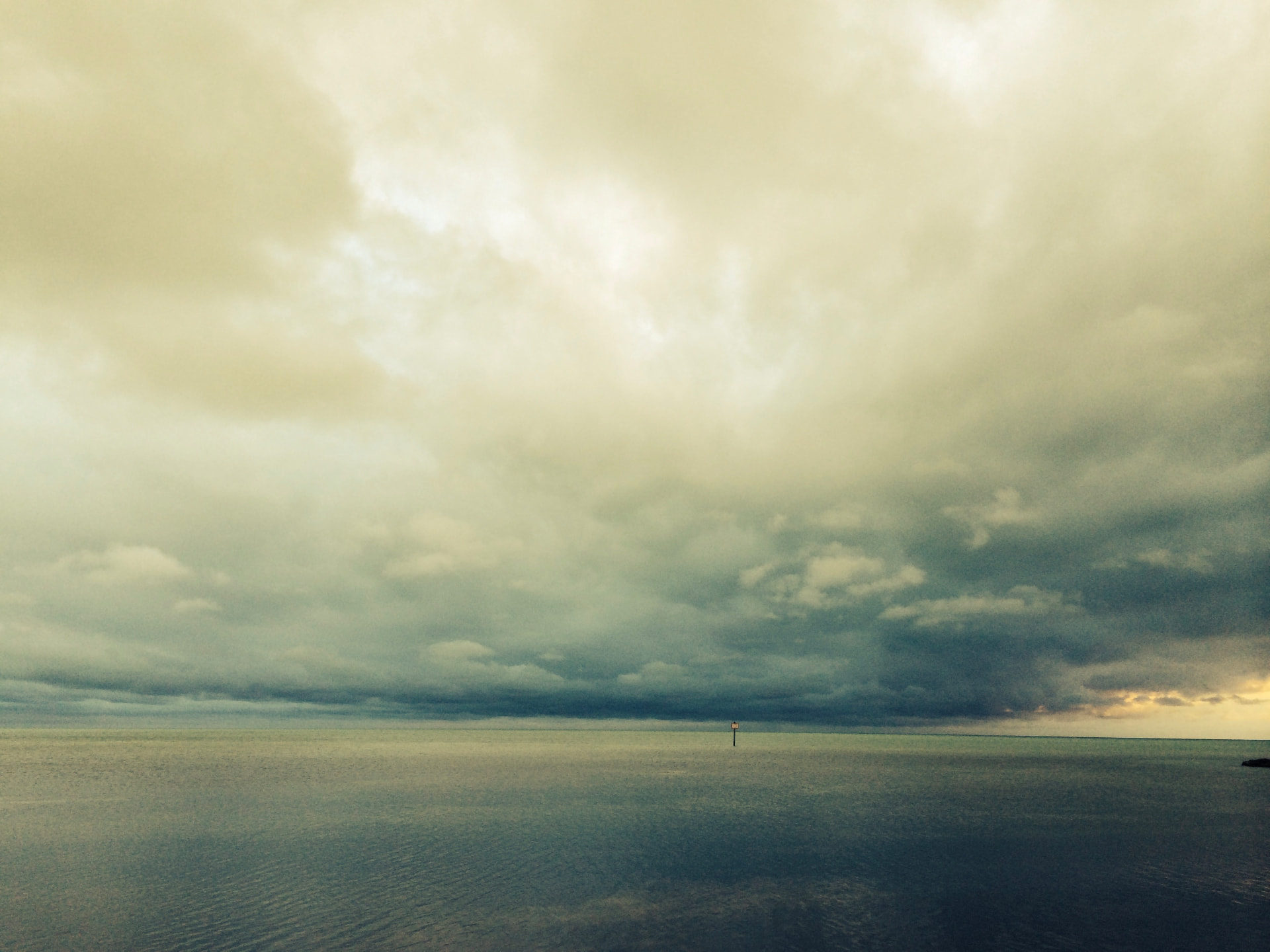
Out on the pale green water, between her and the islands, moored sailboats rocked on the tide. She sat in the bar, ordered a margarita, held ice to the inside of her wrist where a mosquito had bitten her already. It would soon be sunset, but the sun tonight was invisible behind rolling dark clouds. A schooner passed between the dock and the moored boats, small figures on deck hauling up ragged sails. A black schooner, passing like sleep, like dream. She watched it go, out past the hotels and into the ship channel.
She wondered how long it would take.
From Seas Outside the Reef, second edition, Open Boat Editions, 2023. © Rosalind Brackenbury.